
Dr. Marcela T. Garcés received an International Travel Grant from the Committee on Teaching & Faculty Development during her spring 2024 sabbatical. The fellowship supported two initiatives: (1) an international faculty development seminar at a conference in Santiago de Compostela, Spain (July 2024); (2) the development of a new Siena University course titled “Food Studies in the Transhispanic World” (Fall 2024). Her work in Food Studies is rooted in her discipline of Iberian Cultural Studies. Historically, more attention has been given to “gastronomically hegemonic” areas such as France and Italy, while less attention is paid to the Transhispanic world, resulting in a “lack of scholarship on Spain and […] limited attention paid to Latin America and Latinx-focused food cultures in the United States” (Anderson & Ingram, 472-3).1 Therefore, both teaching Siena students and helping to equip scholars in her field with research and pedagogical tools to contribute scholarly products and courses is fundamental to remedying this lack of representation.
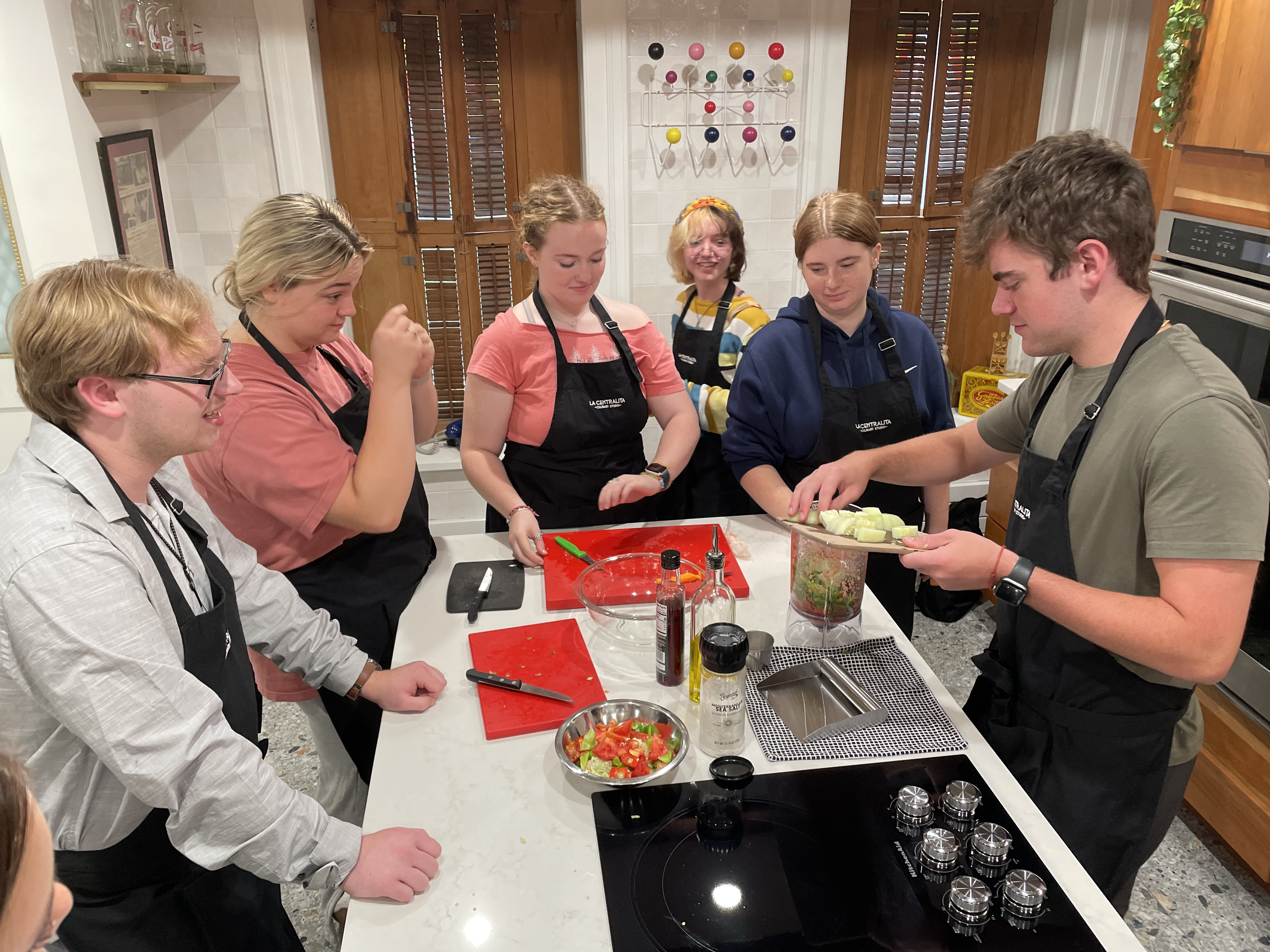
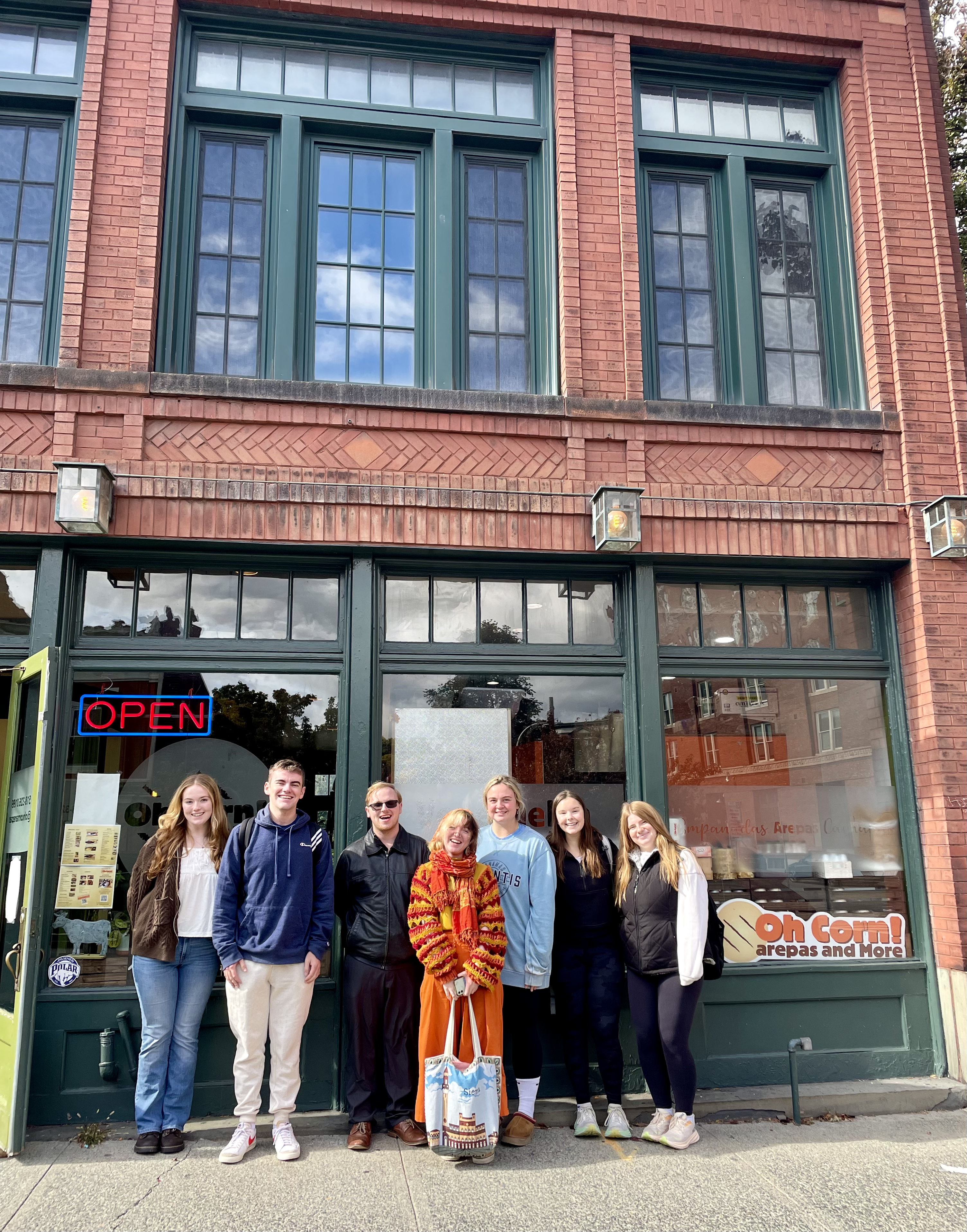
Garcés developed a hybrid course, Food Studies in the Transhispanic World on Canvas, taught as a 400-level course in Spanish and cross-listed with International Studies. In addition to analyzing Food Studies course readings and discussions, students enjoyed three different course-based excursions to the University at Albany Special Collections to study food-related texts with Latin American and Iberian librarian Jesús Alonso Regalado from Salamanca, Spain, did a cooking class in Spanish to learn how to make gazpacho, and learned about and tried Venezuelan cuisine, including interviewing the owner of Oh Corn Arepas, who is from Caracas, Venezuela in Spanish. For another class activity, students tasted and evaluated a series of products and their labels from six Spanish-speaking countries, reflecting together as a class about taste, health packaging, and marketing, and making connections with their other areas of study as students from business, education, and science backgrounds. Framed by Lucy Long’s concept of culinary tourism (1998), they discussed what surprised and interested them about the flavor, marketing, and history of each item. After interacting with and talking about the cultural products in person, students completed online discussion boards to “think with food,” employing Transhispanic theoretical sources and individual research to further understand food’s communicative power. Garcés hopes to teach the course again soon!
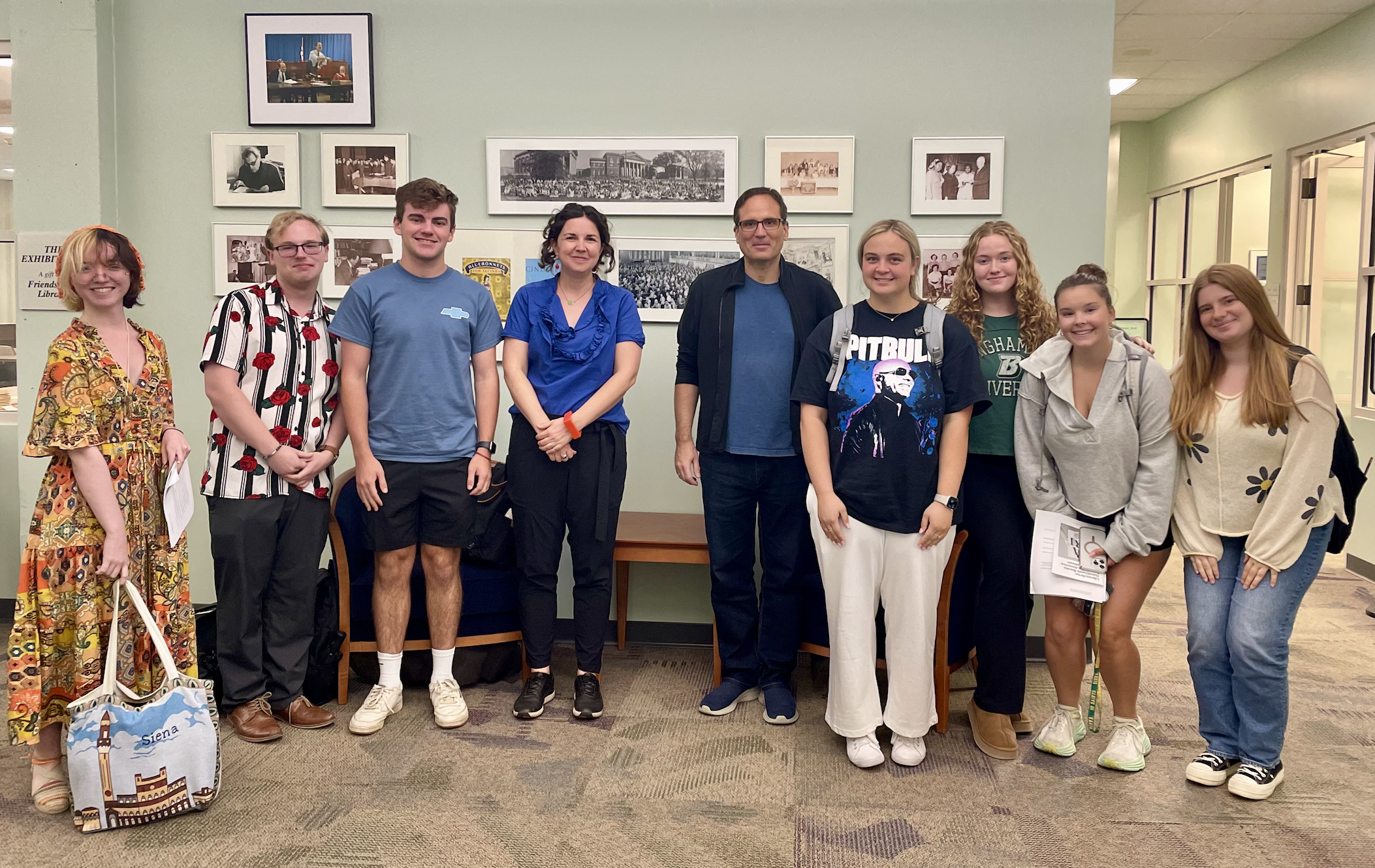
Above: Students at University at Albany Special Collections.
Below: A gazpacho cooking class at La Centralita Culinary Studio and a visit to Oh Corn Arepas.
- Anderson, Lara & Rebecca Ingram.”Introduction. Transhispanic Food Cultural Studies: Defining the Subfield.” Bulletin of Spanish Studies, Vol. XCIII, No.4, 2020. ↩︎