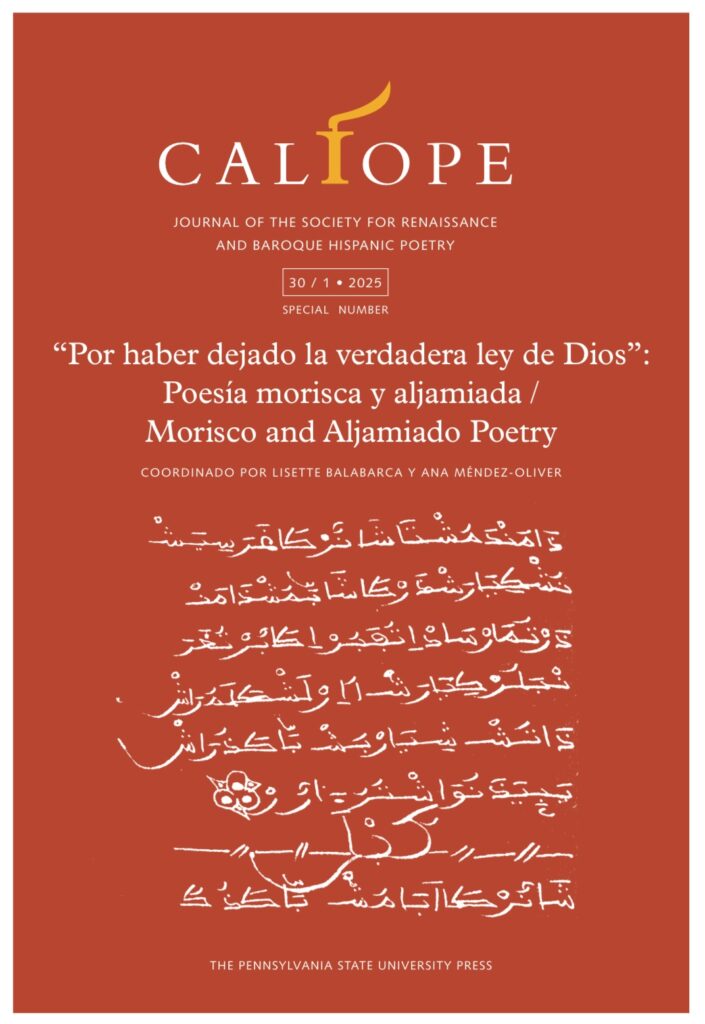
In 2025, Dr. Lisette Balabarca co-edited a special issue of Calíope: Journal of the Society for Renaissance and Baroque Hispanic Poetry. The volume’s title: “Por haber dejado la verdadera ley de Dios”: Poesía morisca y aljamiada.
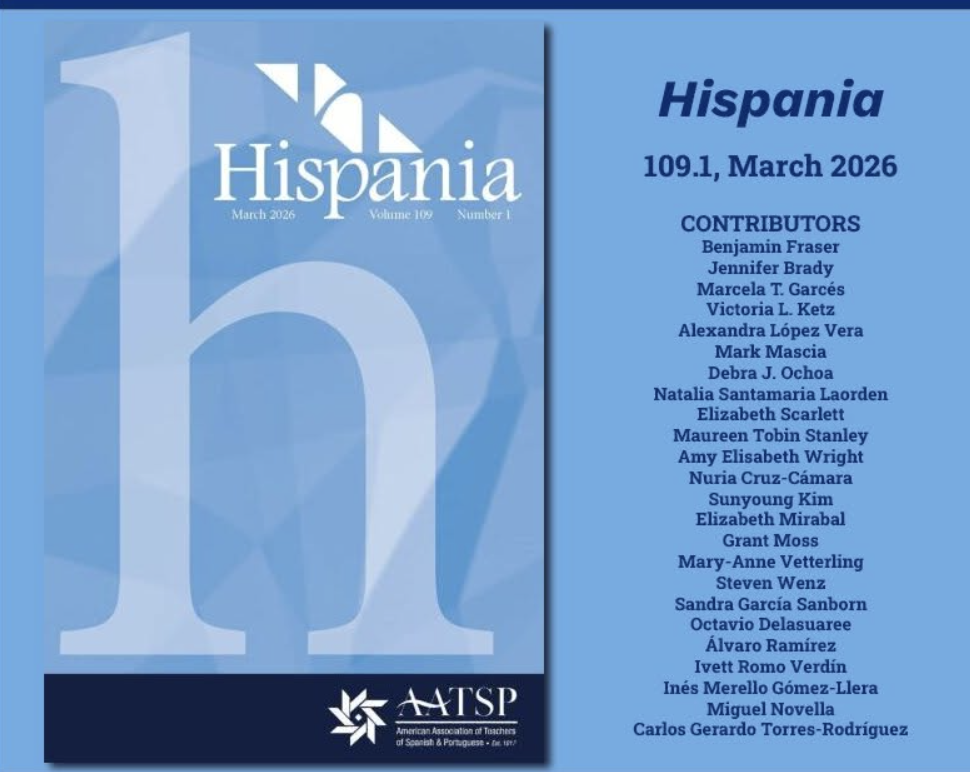
Dr. Marcela Garcés published about her Spanish 250 course in an article titled “Medical Spanish: Online Pedagogical Tools in a Social Justice Context” in a special issue of Hispania titled Health and Well-being in Spanish and Portuguese Contexts in March 2026, edited by Jen Brady.
She published two book reviews as well: (1) Food Studies en español. Investigación actual en gastronomía y comunicación. Eds. Yanet Acosta and Rebecca Ingram. Madrid, Editorial Fragua. 2024. 180 pp. Archives on Food, Culture and Nutrition, (2026) and (2) Digestible Governance. Gastrocracy and Spanish Foodways. Eds. Eugenia Afinoguénova, Lara Anderson and Rebecca Ingram. In Interdisciplinary Studies on the Mediterranean, (2025).
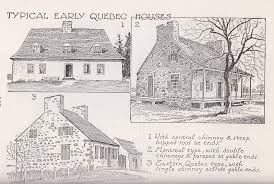
In June 2025, Dr. Janet Shideler was invited to make a presentation to the Capital District Genealogical Society regarding the lives of French Canadians in Québec before the exodus of many of them for New England and New York. That talk, entitled “But Who Were They?: The culture of the French of North America,”examined the lives of the people of New France: where they came from, their interactions with indigenous populations, their homes, land settlement, the values and identity that emerged over the centuries, and the departure of nearly 1 million Québécois for “les États,” beginning around 1840.
In July 2026, Dr. Nathalie Degroult presented the film La Brigade at the annual American Association of Teachers of French (AATF) Conference in Boston during the session “Allons au Cinéma: Promoting French through Films, Volume V.” Dr. Degroult’s piece on La Brigade is featured as one of fifteen contributions in this pedagogical volume.
In Fall 2025, students in Dr. Lisette Balabarca’s Spanish 320: Introduction to Hispanic Literature course completed a creative writing project that can be seen here. For this assignment, they wrote poems, short stories, and personal essays in Spanish.
Guest speakers
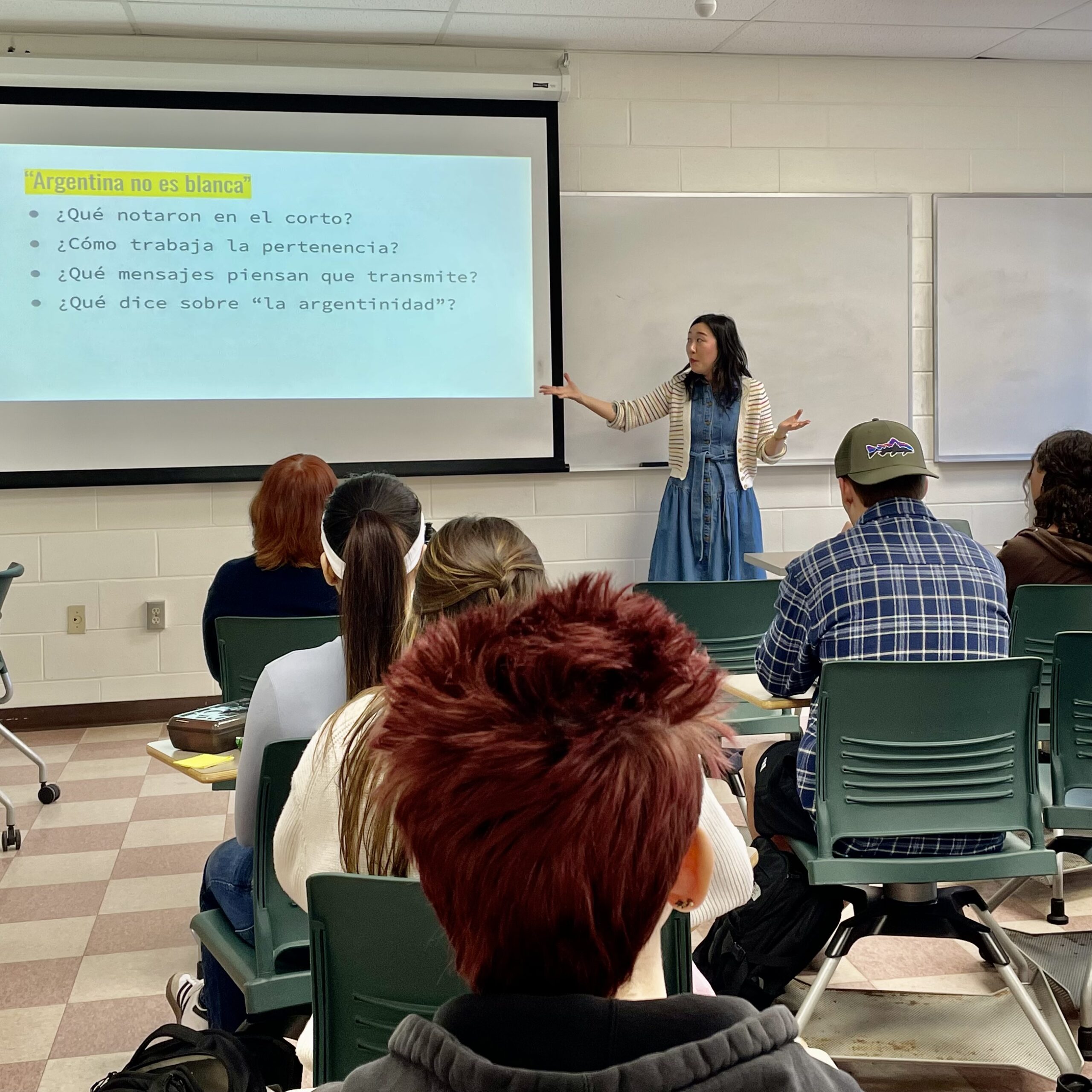
In the Spring of 2026, Dr. Lisette Balabarca and Dr. Marcela Garcés organized a fascinating invited lecture by Dr. Silvina Yi (Union College) to talk about her research about race in Argentina in Dr. Balabarca’s Spanish 355: Transatlantic Connections in the Spanish-Speaking World.
Our new internship course – Spanish 375!
“This summer, I had the opportunity to have an internship at the Spina Bifida Association of New York State. This association works to “build a better and brighter future for all those impacted by Spina Bifida.” This is through three main areas, which are advocacy, education, and support. As a Spanish major I have always learned that language is much more than a way to communicate- it is a way to build trust, create meaningful connections, and to ensure that everyone has been able to have equal access to information. My internship with SBANY has allowed me to put that belief into practice while helping make resources more accessible for Spanish-speaking individuals and families.”
-GayLynn Kirn, Spanish major, SPAN 375: Internship in Spanish, summer 2026 with Dr. Balabarca.
Ashley Phelps ’26 and Aiden Irish ’26 worked with Dr. Marcela Garcés (Professor of Spanish, Siena University) and MaryBeth Becker (Retired English and Spanish teacher; current part-time ENL teacher at Brittonkill/Brunswick Central Schools) as their content and clinical supervisors during the spring of 2026. Ashley and Aiden were observed by both Becker and Garcés multiple times, which is a great feature of Siena’s Education program as mentoring is in depth and consistent, helping students to grow. In addition, both worked closely with full-time teachers in their placements, receiving invaluable on-the-job experience to prepare them for the future.
Ashley Phelps at Shaker High School
Ashley Phelps spent the semester student teaching at Shaker High School with her mentor teacher, Kelly Mattice. Reflecting on the time she spent there, Ashley stated: “My experience in my student teaching placement pushed me to grow in ways that I didn’t know were possible. My most joyful moments have been collaborating with my mentor, Kelly Mattice, and connecting with the awesome students in our classroom.” What a great experience Ashley had! She will move to Syracuse, New York to pursue employment opportunities there this fall.
Aiden Irish at Bethlehem Middle School
Aiden Irish’s student teaching placement was at Bethlehem Middle School, where he worked alongside his mentor teacher Vanessa Treffert. Aiden reflected: “my favorite part about student teaching was the connections that I was able to make with my students. While the content and the skills gained through learning a new language are important, it is imperative as an educator that I strive to connect with my students and provide them an environment where they feel respected, cared for, and aware they have the potential to do anything they strive to do.” It’s clear that Aiden connected Franciscan ideals to his work in the classroom. He has already secured a job for the fall, and will be a 7th grade Spanish teacher in Ravena, New York.
Dr. Garcés finds it really gratifying to work with students in Spanish Education, a truly professional preparation program. There are many job opportunities for Spanish teachers currently, so we hope that more students will join our Spanish Education program to serve as teachers in our area and beyond!
In spring 2025, student and future Spanish teacher Aiden Irish had the opportunity to work at the Siena Research Institute (SRI) for an independent study with his faculty mentor Dr. Garcés (Professor of Spanish), fulfilling his curiosities about the opinions of Hispanics on pressing issues such as the economy, politics, and societal conflicts. Once a week, Aiden spent a few hours dialing and conducting surveys on behalf of SRI and other organizations trying to receive and organize answers from surveys for them to use in their studies.
Throughout his shifts, Aiden gained much experience conversing with Spanish speakers and collecting responses for organizations such as the New York Times, the New York State Department of Health, and more. However, for Aiden the focus of this experience was not only to collect data for these organizations, but also to listen and retrieve these opinions specifically from those of Latino origin. For too long, they’ve struggled to have their voices heard for many reasons, a couple of which include language barriers and ineligibility in certain polls. The Siena Research Institute, however, strives for equality and inclusion, and wants the opinions of everyone. They look for people such as Aiden who can speak Spanish to conduct polls and hear from the Latino population specifically.
One of Aiden’s most profound experiences was when he got to speak with a woman who lived in Rhode Island but was originally from the Dominican Republic. This specific survey looked for answers on the subject’s community and overall opinion on certain themes and issues within the community, such as the economy, politics, response to certain issues, and more. Aiden had a smooth and informative conversation with the woman and found that even through the phone he was able to understand the woman well and accurately record her answers. The woman found the economy to be in bad shape and expects in the future years for it to worsen due to recent government regulations. She hopes that this tariff war will end soon and that the economy will somehow become strong again.
Aiden utilized this experience to connect with his future plans to be a Spanish teacher. In his weekly diaries he wrote for his independent study, Aiden compared his experiences with the competencies of the National Association of Colleges and Employers (NACE). Aiden would reflect on what he had learned or experiences and select which competency it mostly corresponded to, such as Communication, Equity and Inclusion, Professionalism, and more. For example, Aiden mentioned his adaptability to technology by learning how to switch the transcript’s language from English to Spanish to accurately ask questions. He then proceeded to use this to explain how important adaptability is in the classroom and how this experience will be useful in his career.
Overall, Aiden is very appreciative of this experience and the valuable lessons he has learned through the Siena Research Institute. He extends his gratitude to SRI for letting him conduct his independent study work there. Dr. Garcés enjoyed hearing all about what Aiden learned when they met regularly to converse in Spanish about his written reflections submitted as part of his work.
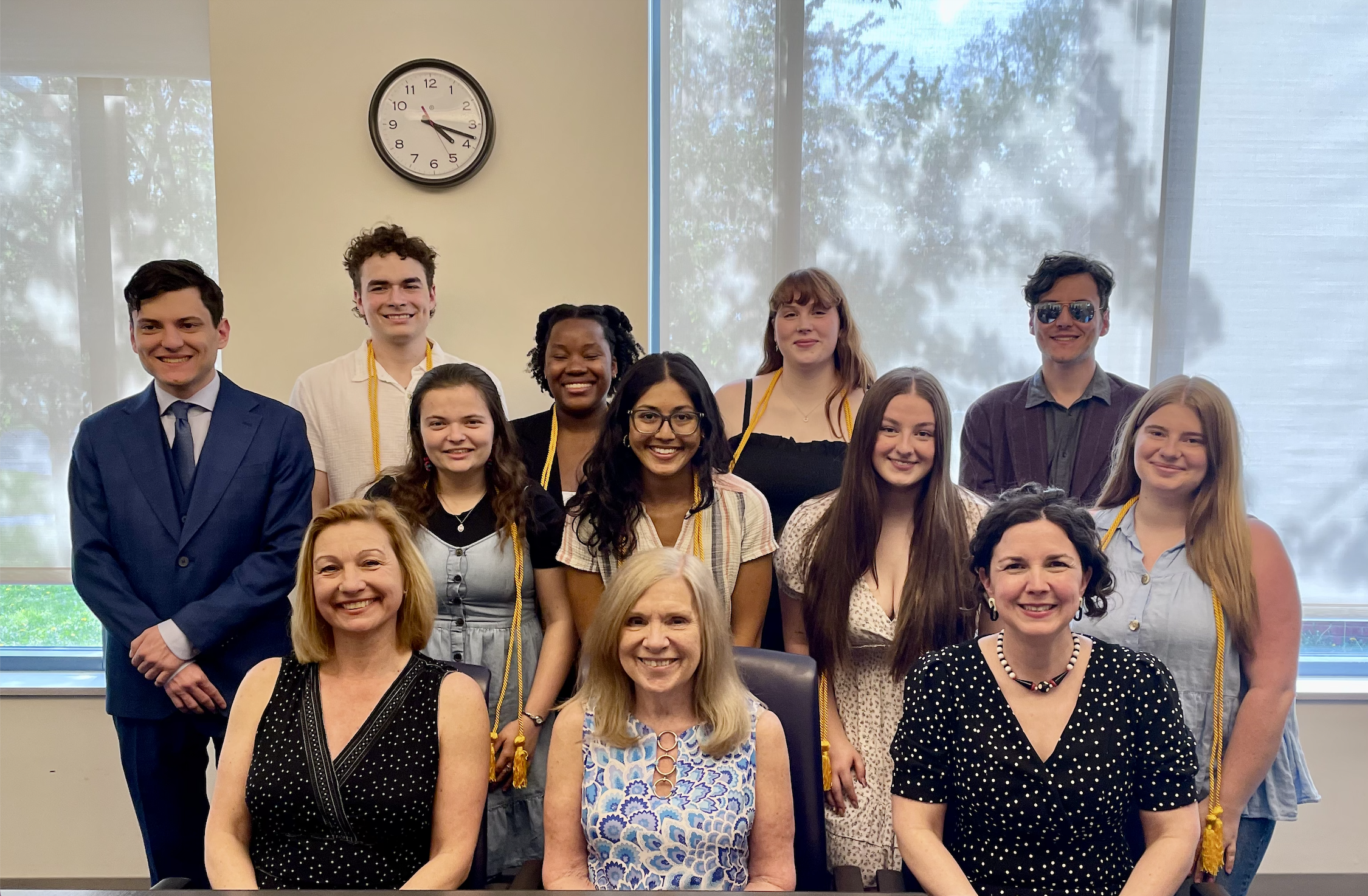
On May 1, the Department of Modern Languages & Classics inducted our latest members into Alpha Mu Gamma, the National Collegiate Foreign Language Honor Society. Friends and family members were in attendance, and a reception followed the ceremony. We celebrated the impact that language study has had on the lives of all our students. Congratulations, Class of 2025! 2025 Alpha Mu Gamma inductees include: French: Myles Hogan Kiara Pierristil Italian: Nicholas Caruso Sebastian Caruso Spanish: Emma Clark Jaime Cochran Grace Gillin Asavari Gowda Emma Harkness Alli Kerr Jason Lazarz Madison Tinker
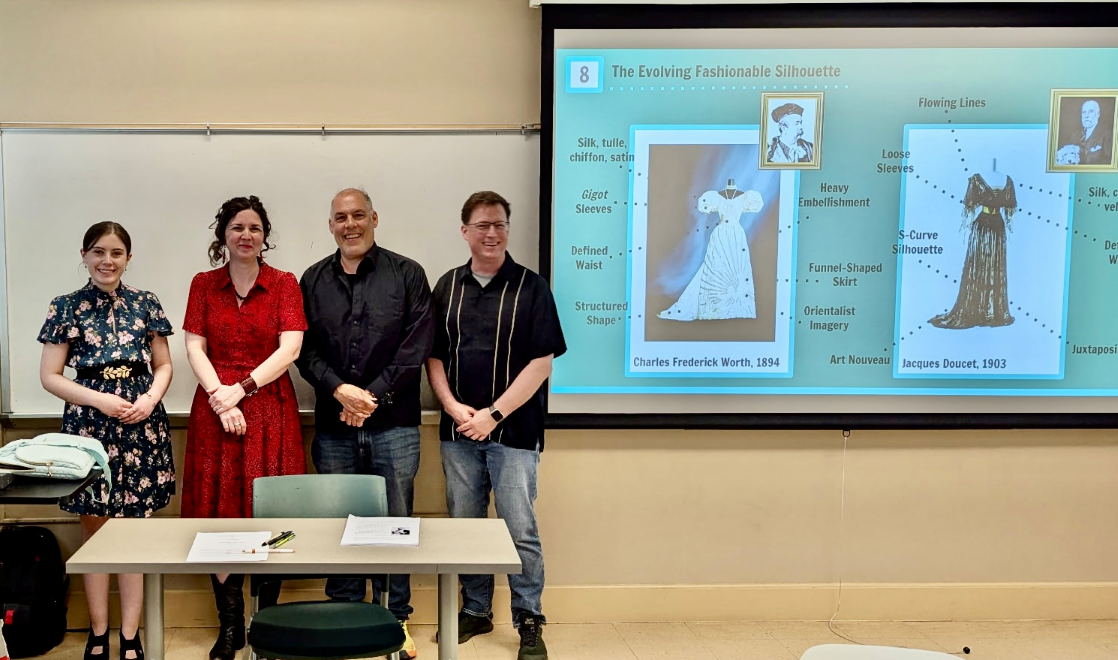
In other department news, Dr. Garcés (Spanish) was the first reader for Julia Moor’s Honor’s Thesis, and Dr. Sham (Classics) was an additional reader along with Dr. Cooper (History). Her thesis was titled “A New Cage: the Constraint of Paul Poiret’s ‘Liberating’ 20th Century Haute Couture Fashions,” and she successfully defended it on April 28, 2025.
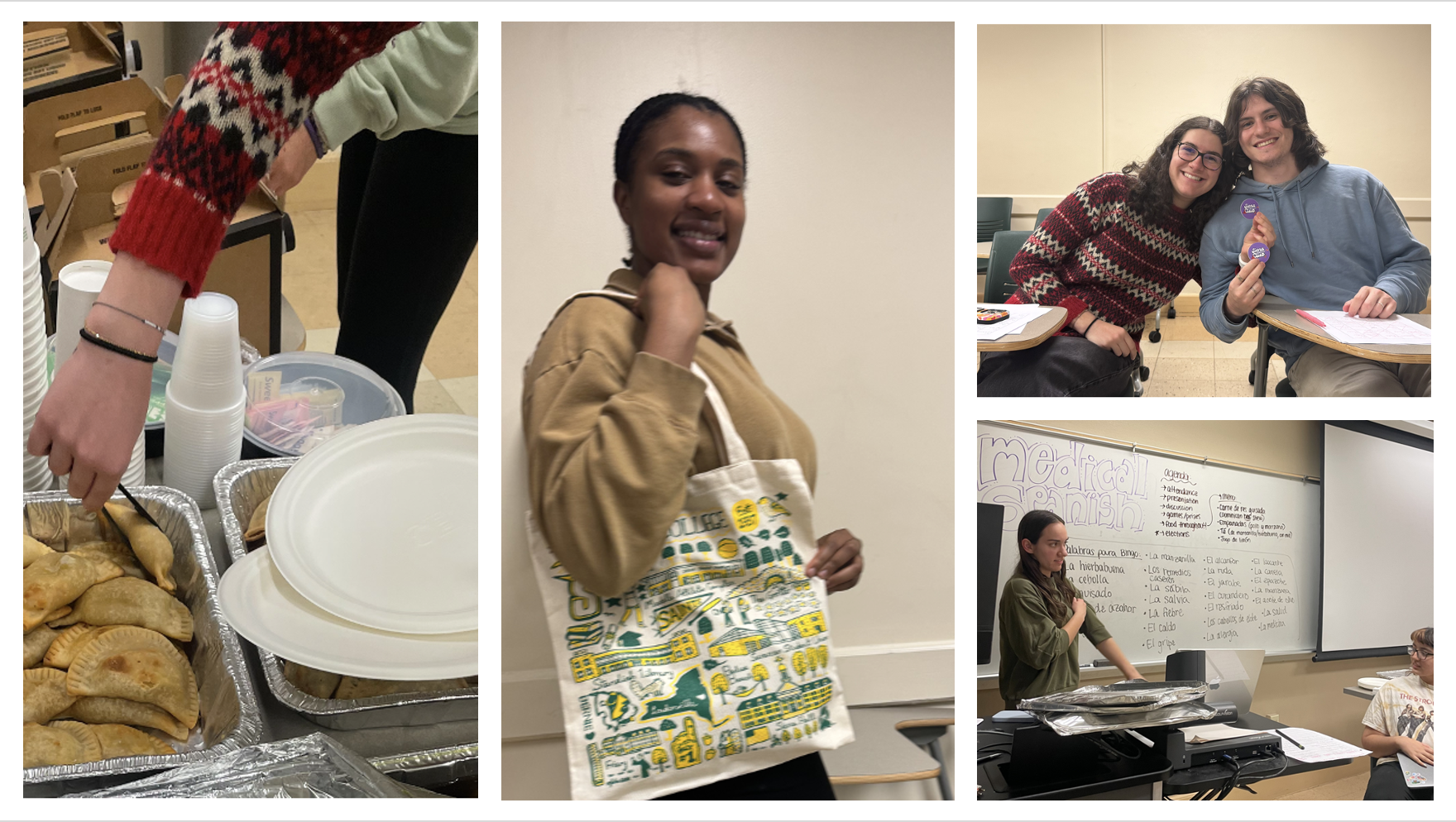
The Spanish Club at Siena University has held many events this academic year, including tertulias (informal student-led conversation groups) and different themed events. They culminated the semester with an event about Medical Spanish (SPAN 250), a class developed by Dr. Garcés that she teaches every spring semester. The course includes an overview of medical vocabulary, social justice based cultural exercises as the course is a Franciscan Concern Social Justice Core Course, and online conversations with native speakers versed in medical topics through the online platform Talk Abroad.
Many of the club’s officers have taken the class since they are students in the Albany Medical College and Health Studies programs at Siena, so it will be useful to them in their future careers to have proficiency in medical vocabulary and cultural norms of the Spanish-speaking world.
The students were very creative in developing a special evening for their classmates as the event was not only about medical Spanish vocabulary, but they also paired it with comfort foods like empanadas and foods that are known to have healing properties such as chamomile tea and a hearty soup, a nod to natural remedies that are discussed in the class textbook. They also gave away prizes, making the event even more interactive!
Next year, the club officers are Gabrielle Hix (President), Cristiana Hoene (Vice President), Mya Chrysogelos (Secretary), Tanya Shukla (Treasurer), Giovanna Pérez (Event Coordinator), and Gael Peña Reyes (Public Relations).
¡Buen trabajo!
A night of tasty food, new vocabulary and Siena swag!
Dr. Marcela T. Garcés received an International Travel Grant from the Committee on Teaching & Faculty Development during her spring 2024 sabbatical. The fellowship supported two initiatives: (1) an international faculty development seminar at a conference in Santiago de Compostela, Spain (July 2024); (2) the development of a new Siena University course titled “Food Studies in the Transhispanic World” (Fall 2024). Her work in Food Studies is rooted in her discipline of Iberian Cultural Studies. Historically, more attention has been given to “gastronomically hegemonic” areas such as France and Italy, while less attention is paid to the Transhispanic world, resulting in a “lack of scholarship on Spain and […] limited attention paid to Latin America and Latinx-focused food cultures in the United States” (Anderson & Ingram, 472-3).1 Therefore, both teaching Siena students and helping to equip scholars in her field with research and pedagogical tools to contribute scholarly products and courses is fundamental to remedying this lack of representation.
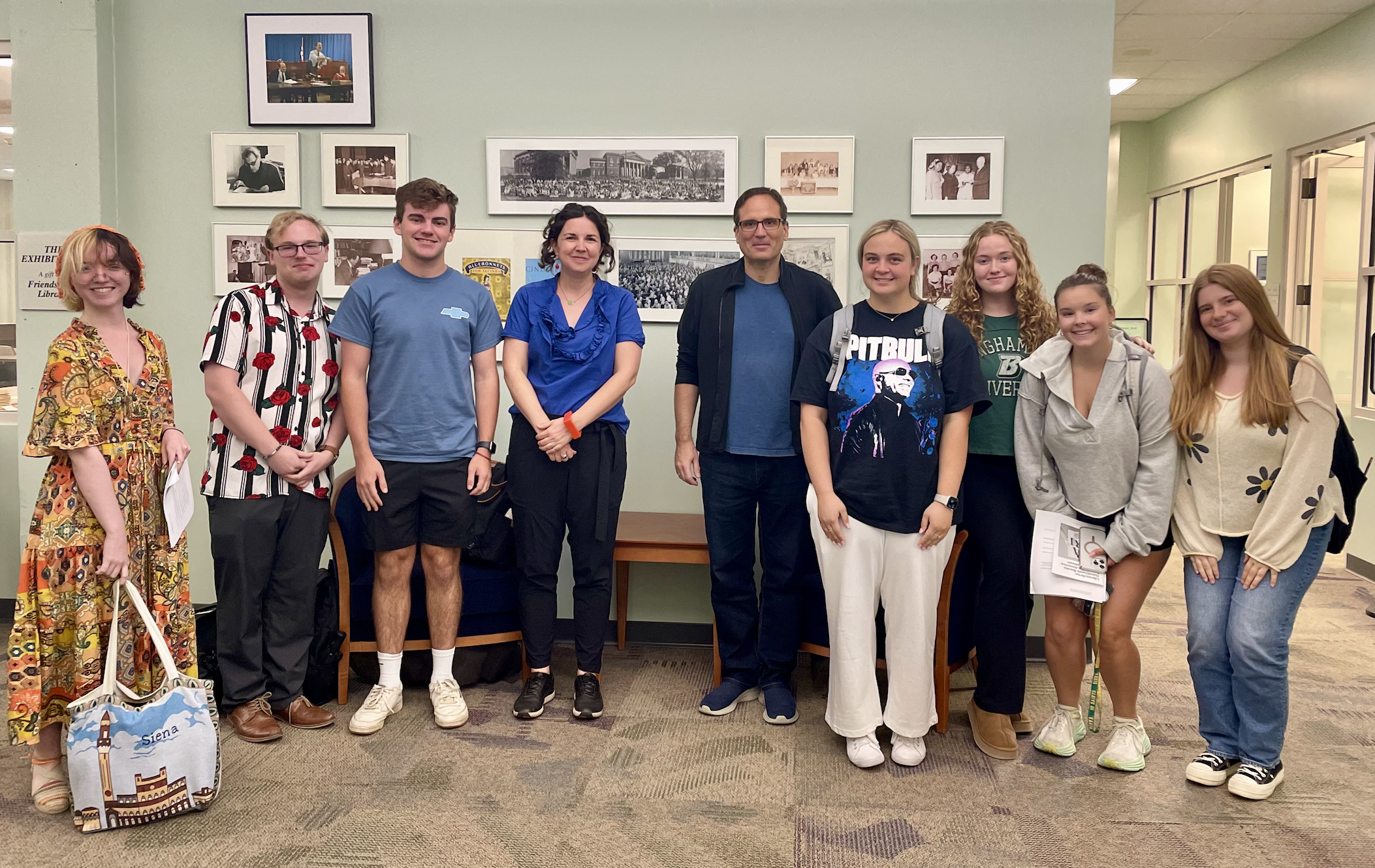
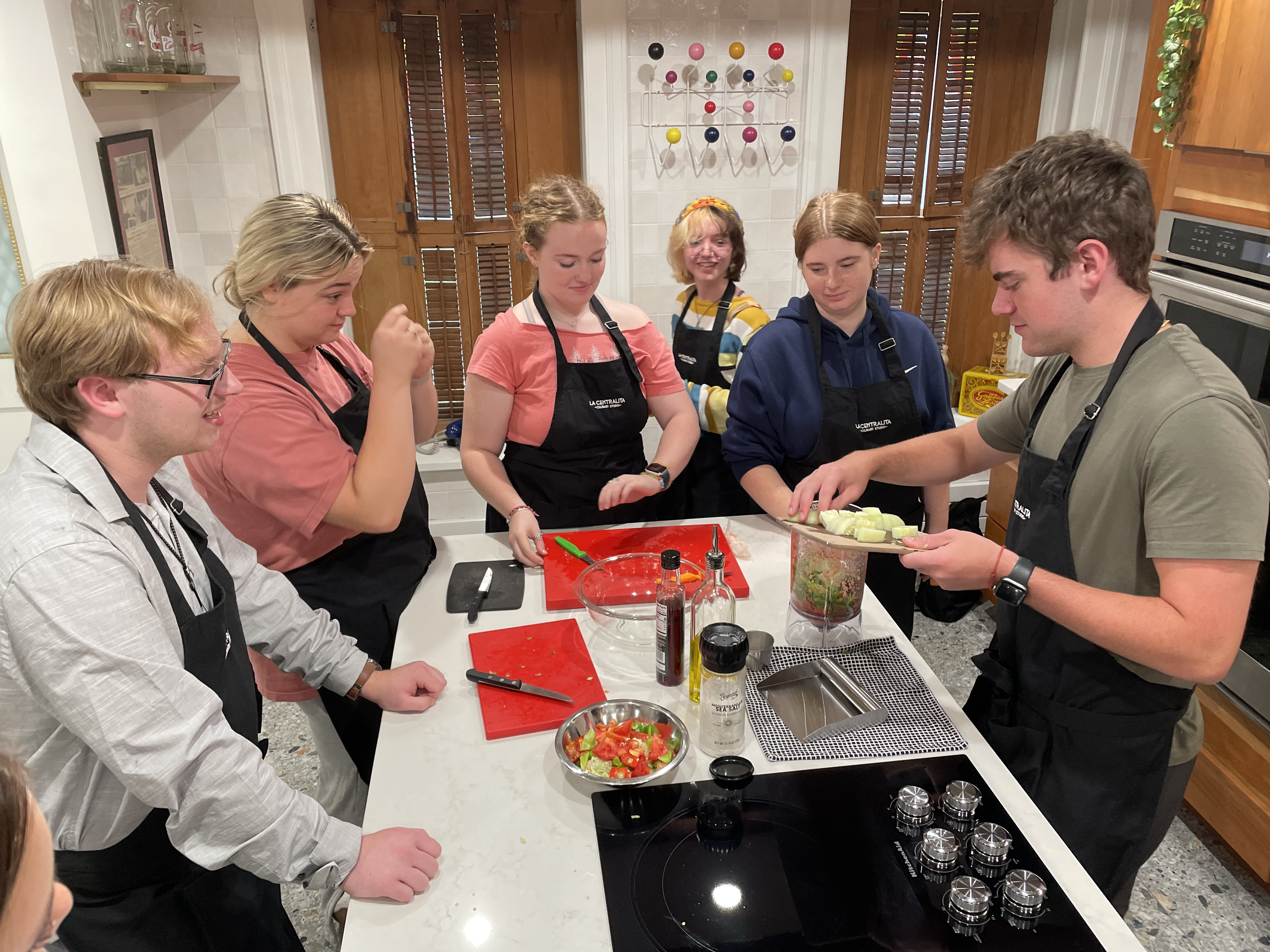
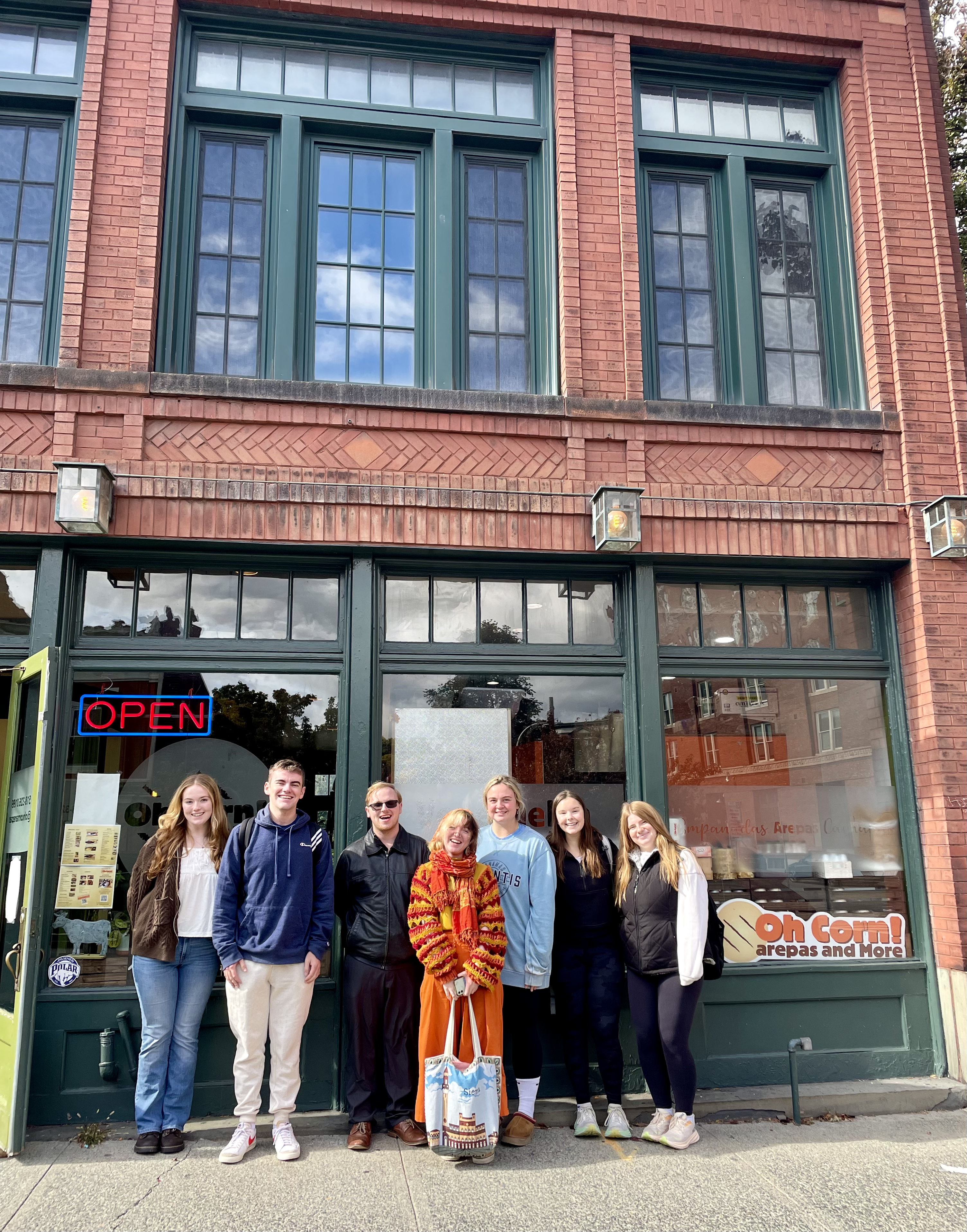
Garcés developed a hybrid course, Food Studies in the Transhispanic World on Canvas, taught as a 400-level course in Spanish and cross-listed with International Studies. In addition to analyzing Food Studies course readings and discussions, students enjoyed three different course-based excursions to the University at Albany Special Collections to study food-related texts with Latin American and Iberian librarian Jesús Alonso Regalado from Salamanca, Spain, did a cooking class in Spanish to learn how to make gazpacho, and learned about and tried Venezuelan cuisine, including interviewing the owner of Oh Corn Arepas, who is from Caracas, Venezuela in Spanish. For another class activity, students tasted and evaluated a series of products and their labels from six Spanish-speaking countries, reflecting together as a class about taste, health packaging, and marketing, and making connections with their other areas of study as students from business, education, and science backgrounds. Framed by Lucy Long’s concept of culinary tourism (1998), they discussed what surprised and interested them about the flavor, marketing, and history of each item. After interacting with and talking about the cultural products in person, students completed online discussion boards to “think with food,” employing Transhispanic theoretical sources and individual research to further understand food’s communicative power. Garcés hopes to teach the course again soon!
Above: Students at University at Albany Special Collections.
Below: A gazpacho cooking class at La Centralita Culinary Studio and a visit to Oh Corn Arepas.
Anderson, Lara & Rebecca Ingram.”Introduction. Transhispanic Food Cultural Studies: Defining the Subfield.” Bulletin of Spanish Studies, Vol. XCIII, No.4, 2020. ↩︎
Submitted by Dr. Marcela Garcés, Professor of Spanish
We are excited to share a first-person account from Samantha Hall, who graduated from Siena in 2020, about her experience as a Fulbright Teaching Assistant in Spain, a highly competitive program. Her studies in Spanish and international experiences clearly helped her to be successful in being chosen for this opportunity. ¡Gracias, Samantha!
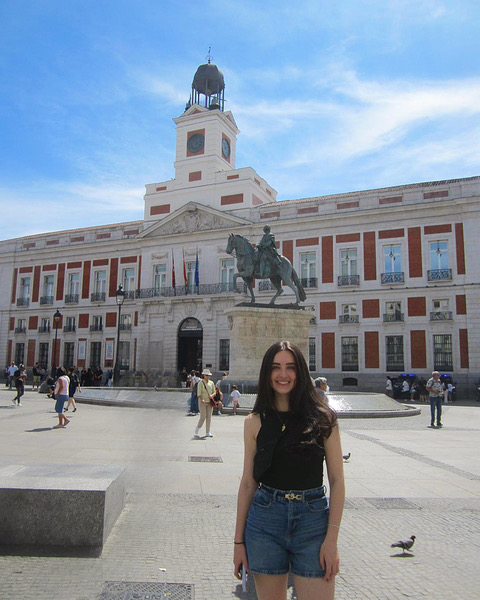
My name is Samantha Hall, and I am currently a Fulbright English Teaching Assistant in Madrid, Spain. I teach at Universidad Camilo José Cela (UCJC) in the science department, where I lead classes such as Nutrición and Fisioterapia. So far, everything has been going wonderfully, and I absolutely love living in Madrid.
In my free time, I enjoy cooking, reading, and parking-sitting with my friends. My educational background in Spanish has greatly helped me communicate with fellow professors and engage with the local community. Since studying abroad in Buenos Aires, Argentina, and volunteering at a school there, I’ve been eager to take the next step as a Fulbright Teaching Assistant.
Although the application process was challenging, it has been incredibly rewarding, and I couldn’t have done it without the support of Matt Schiesel, Siena’s Associate Director of Study Abroad. Now that I’ve been here for a month, I’ve learned so much about Spanish culture, especially its history and amazing food. I also plan to volunteer with the Celiac Association in Madrid, allowing me to connect my personal experience with Celiac Disease to my students studying science and medicine, particularly in the field of nutrition. I’m so excited to see what the next year holds!
On April 26 2024, twelve students in French and Spanish were inducted into the National Honor Society Alpha Mu Gamma. Congratulations to our language graduates! The Department of Modern Languages and Classics is very proud of all your accomplishments.
We are excited to share about recent research completed by members of the Department of Modern Languages & Classics. While all professors spend a lot of time teaching at Siena University, they also dedicate a considerable amount of time to honing their research and scholarly activities. This informs and enriches their courses and is line with the mission of Siena University to “explore knowledge from a variety of perspectives and disciplines.”
Dr. Lisette Balabarca (Associate Professor of Spanish) presented at two international conferences during Summer 2023, for which she received funding from prestigious academic entities. She presented “Jewelry and Precious Stones: The Resignification of Female Luxurious Accessories in Early Modern Spain” at The Migration of Objects between Islam and Christianity in the Medieval and Early Modern Mediterranean: New Uses, New Meanings, held at the University of Sarajevo in Bosnia Herzegovina. This conference was funded by the European Cooperation in Science and Technology (COST) Association. Her travels also took her to Trinity College in Dublin, Ireland, where she presented “Christian and Muslim Female Converts in Early Modern Spanish Literature” for the Arabic Poetry Cairo Genizah (APCG) Research Project, a conference supported with funding from the The European Research Council (ERC). In September 2023, Dr. Balabarca attended the Society for the Renaissance and Baroque Hispanic Poetry at the University of Chicago where she presented “The Inversion of Christian Rites in Morisco Poetry: An Analysis of Scatological Elements in Juan Alonso Aragones’ Romances.” Dr. Balabarca’s recent publications include a teaching unit titled “Francisco Núñez Muley’s Memorial,” a collaboration for Open Iberia/América, an online Open Access collection of short pedagogical editions and translations of premodern Iberian and Latin American texts modeled after the editorial practices of commercial anthologies. Take a look at: https://openiberiaamerica.hcommons.org/2023/11/14/francisco-nunez-muley- memorial-granada-1566/ . She also published a book review of “Catherine Infante’s The Arts of Encounter: Christians, Muslims, and the Power of Images in Early Modern Spain” in Bulletin of the Comediantes, vol. 74, no. 1–2, 2023.
Dr. Nathalie Degroult (Professor of French and Department Chair) was elected editor of La Gazette violette last April. It is the newsletter of ASFAP (American Society of French Academic Palms). It is published 3 times a year: Spring, Fall, Winter. She is also the contributor of two rubrics published in each edition: “Le coin des livres” and “L’actu ciné.” Dr. Degroult continues to work actively on pedagogy and film studies. She presented the pedagogical dossier of the film “Il a déjà tes yeux” during a 3-hour workshop entitled “AATF Commission on Cinema presents Volume IV of “Allons au Cinéma: Promoting French through Films—la famille et la communauté” at an International conference in Trois-Rivieres, QC in July 2023. The volume was published in 2022. Degroult also published two book reviews: “Harcele” (Pierre Filoche), French Review, 96.4 (May 2023), and “Rien n’est perdu” (Patrice Guirao), French Review, 97.1 (October 2023).
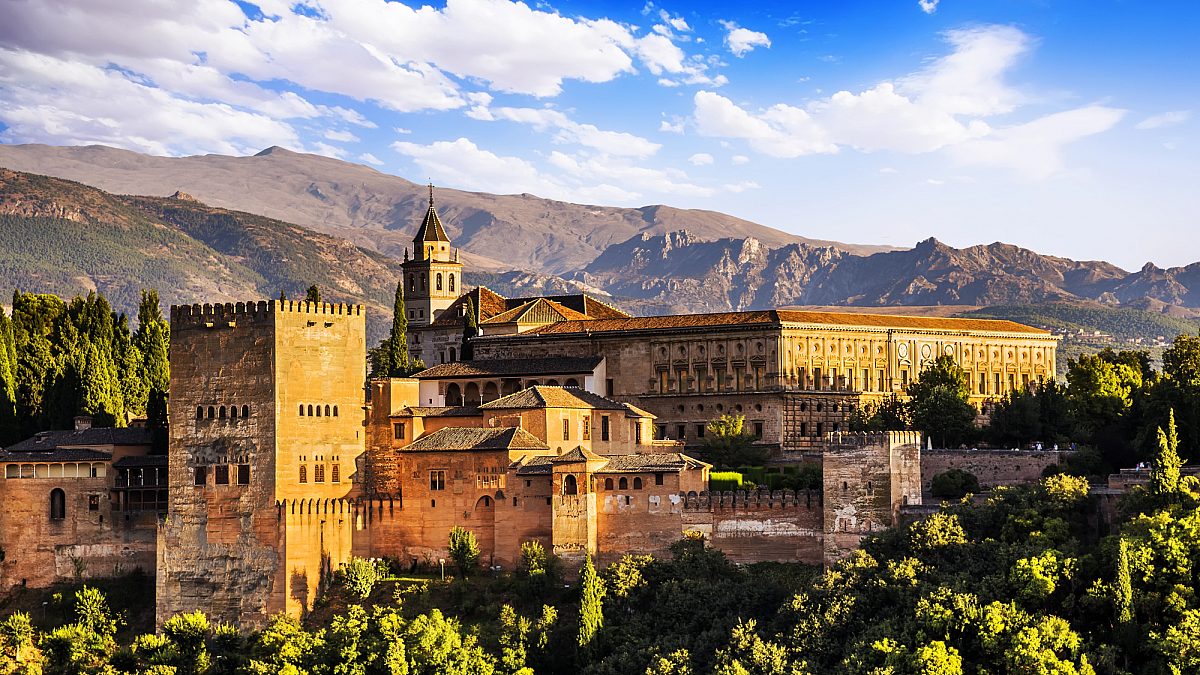
Dr. Marcela Garcés (Professor of Spanish) traveled to Granada, Spain in the summer of 2023 to present her research at a conference titled Post-Pandemic Tourism Transformations. Eighth International Conference on Tourism & Leisure Studies. Her presentation, titled “In Defense of the Anchovy: Tourism Through Place-Based Cuisine” began her work on her sabbatical project about this topic. In October 2023, Dr. Garcés published a book review in the journal Romance Quarterly about a book titled Women’s Work. How Culinary Cultures Shaped Modern Spain by Dr. Rebecca Ingram (UC San Diego). Garcés also published a creative Spanish-English work of poetry titled “Protect Your Magic” in Nos Volvimos a Pasar, edited by Lori Celaya and R.E. Toledo. In Fall 2023, Garcés published an article based on pedagogy in a recent 400-level Spanish course at Siena University. The article, titled “Creative Pedagogical Synergies: What Can We Borrow from Rosalía?” was published in Romance Notes as part of a special edition about the international music star Rosalía called The Rosalía Effect: Popular Music and Culture in Contemporary Spain. Garcés has given several invited lectures recently, including “The Culinary Exchange between Spain and the Americas: Recognizing Difference while Celebrating Fusion” at the FBI Central Offices in Albany, New York in conjunction with her business La Centralita Culinary Studio which she owns with her husband and creative partner; “Celebrating Hispanic Heritage Month: My Story” at Bethlehem Central High School; and a virtual presentation titled “Teaching the Cuisines of Spain Hands-on at La Centralita” for Georgia State University.
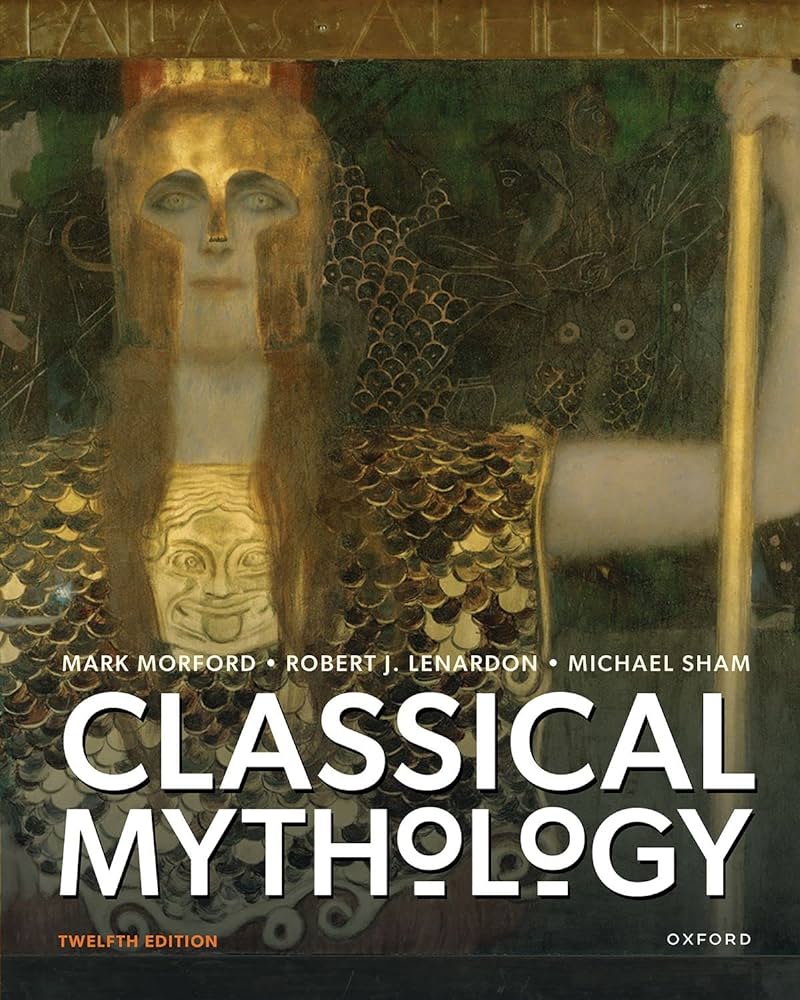
Dr. Michael Sham (Professor of Classics) published the 12th edition of his canonical textbook Classical Mythology in early 2023.
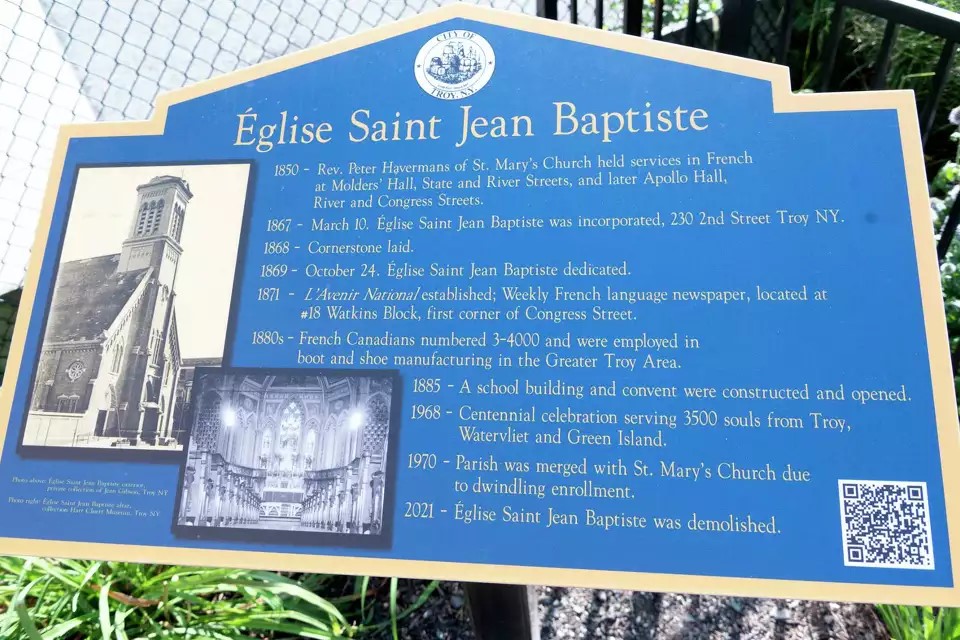
Dr. Janet Shideler (Professor of French) carried out research this past summer related to the lives of various deceased parishioners who worshipped at the Troy, NY Saint-Jean-Baptiste Church and to the church’s significant place at the heart of the city’s “petit Canada” neighborhood. The remarks that she shared at the September 12, 2023 dedication of a historic marker for the church, razed in 2021, are accessible via a QR code on the plaque and were part of the content of a September 15 Times Union article.
As you can see, our department exemplifies diverse, interdisciplinary scholarship that addresses a wide range of material culture, time periods and topics. Stay tuned for more exciting news from the department about our accomplishments!